2025-12-25
Raising the Challenges of Thalassemia Patients at the Workshop on Familiarizing Medical Centers with Service Packages for Special Diseases
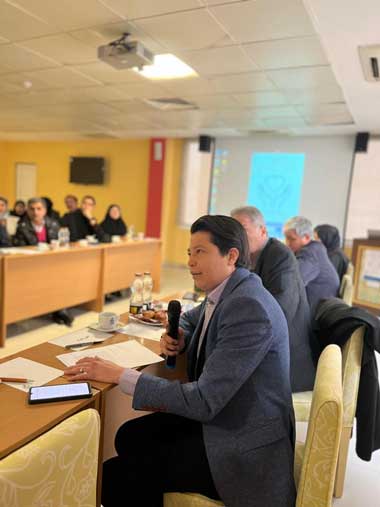
The workshop titled “Familiarizing Medical Centers with Service Packages for Special Diseases and the Fund for Patients with Incurable Diseases” was held on Tuesday, 25 Azar 1404 (December 16, 2025), at the premises of the Foundation for Special Diseases, organized by the Foundation.
This meeting was held with the aim of reviewing and addressing part of the problems faced by special disease patients in accessing diagnostic, therapeutic, and insurance services, and was attended by representatives of the Ministry of Health, insurance organizations, medical sciences universities, and patient representatives.
At the workshop, Engineer Pakzad, the representative of thalassemia patients, while expressing appreciation for holding this meeting and for the measures taken over the past three decades by the Foundation for Special Diseases to improve the situation of these patients, emphasized that although these efforts have been valuable and effective, they are still accompanied by challenges and obstacles at the implementation stage—especially in the execution of the service packages for special disease patients—which require closer supervision, attention, review, and more serious follow-up by the relevant institutions.
He then elaborated on the most important problems faced by thalassemia patients in the process of receiving diagnostic, therapeutic, and insurance services, stressing the existence of a significant gap between approved policies and their practical implementation in medical centers and insurance organizations.
Referring to the unnecessary demand for electrophoresis testing from thalassemia patients when changing insurance, Pakzad stated that despite the official announcement by the representative of the Ministry of Health that this requirement has been removed, some insurance organizations still demand electrophoresis testing from patients in order to issue a special disease insurance booklet. This issue, given frequent blood transfusions and the resulting impact on the accuracy of test results, as well as the high cost of the test for patients, has become problematic.
Engineer Pakzad noted that despite the legal obligation to implement service packages through service provision by medical sciences universities or through purchasing services by the relevant universities, important services such as MRI T2, liver FibroScan, and other sections of the service package are not provided at all in many provinces across the country. In some university medical centers, fees are also charged for providing these services. He added that “these inconsistencies have caused confusion among patients and imposed heavy treatment costs on them.”
He also described the dental service package for special disease patients as practically unusable, explaining that the condition requiring patients to pay the costs upfront and receive reimbursement later constitutes a serious barrier to thalassemia patients’ use of this service.
He added that the heavy out-of-pocket costs borne by patients, along with incomplete reimbursement or delays of several months by insurance organizations, have always been among the main reasons patients do not make use of a large portion of the services defined in the service packages.
The representative of thalassemia patients also pointed to the failure to issue special disease insurance booklets for certain patient groups, including patients with thalassemia intermedia, thalassemia trait, sickle thalassemia, sickle cell disease, and other hemoglobin disorders, despite these groups being defined in the approved service packages, and called for serious reform in the implementation process of this issue.
Another topic raised was the lack of coverage for the treatment of secondary complications of thalassemia, including osteoporosis, diabetes, and fertility problems. According to him, the lack of transparency regarding the issue of “disease tagging” and insufficient information dissemination have disrupted patients’ access to these services.
The representative of thalassemia patients noted that more than 95 percent of patients—and even some officials at medical centers—are unaware of the details of the service packages, emphasizing that services are effectively limited to blood transfusion and iron chelation therapy. He also confirmed, based on statements by representatives of the Ministry of Health present at the meeting, that there is currently no specific mechanism for monitoring and reporting on the implementation of the service packages, and he proposed the formation of a national committee to oversee their implementation.
In another part of the meeting, Engineer Pakzad addressed the consequences of the removal of preferential currency for special disease medications, stating that this removal has led to an increase of tens of millions of tomans in the monthly medication costs of thalassemia patients, resulting in the abandonment or incomplete continuation of treatment by many patients, and consequently an increase in mortality and the repetition of bitter experiences of the past. He emphasized that about 30 percent of thalassemia patients, due to drug sensitivity, are forced to use imported medications, which for them constitute a therapeutic necessity rather than a luxury item.
At the end of the workshop, participants emphasized the vital role of the Foundation for Special Diseases in creating a platform for dialogue among patients, the Ministry of Health, and insurance organizations, and called for the continuation of such meetings and the strengthening of oversight over the implementation of approvals throughout the country.
/End of message
Charity Foundation of Special Disease
@cffsd